Catalysis and Hard Materials
Studying catalysis and semiconductors together can lead to advancements in electrocatalysis, optoelectronics, and sensor technologies that combine chemical sensing with electronic devices. It is a critical area of study for advancing technology and addressing global challenges.
Faculty Research Areas
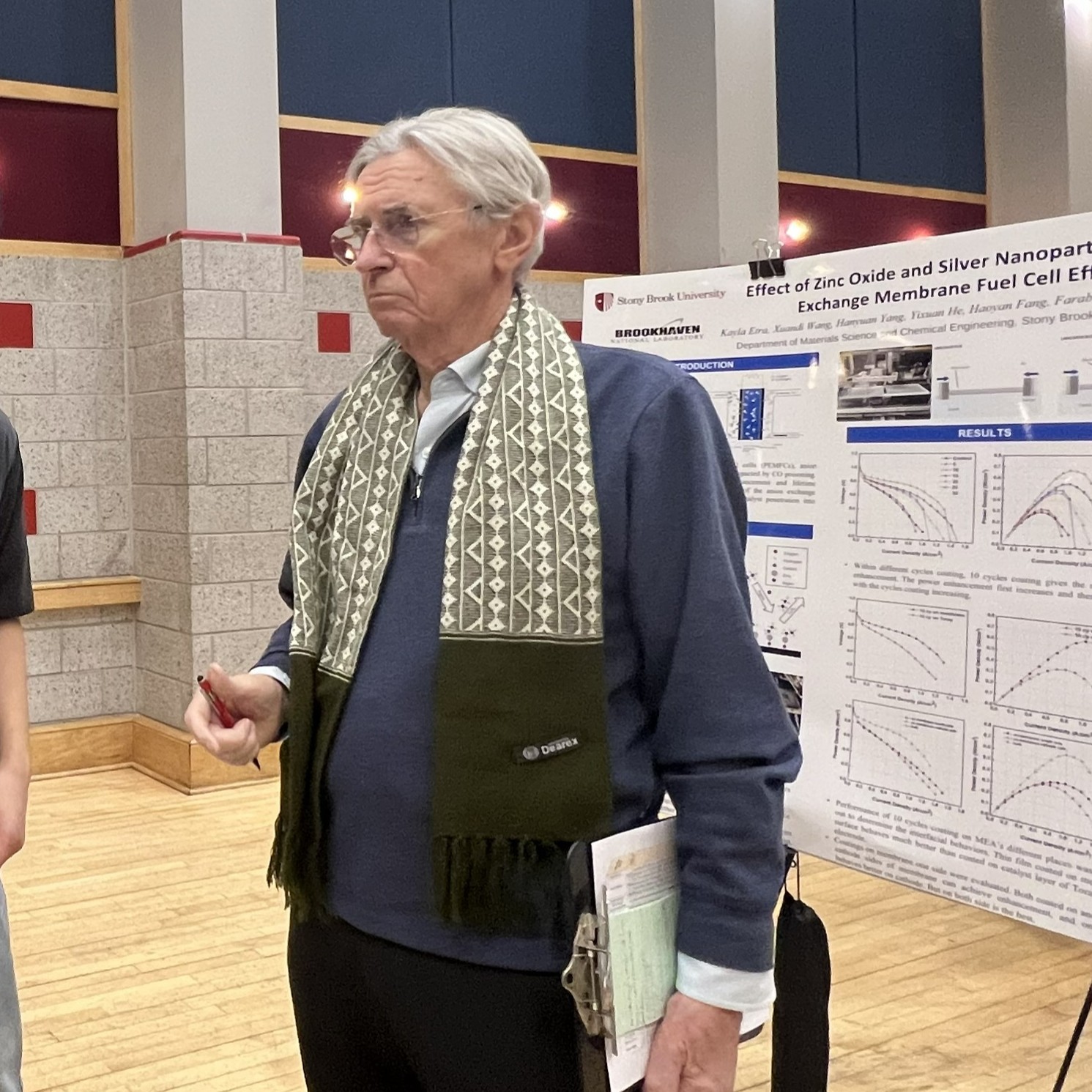

Clive Clayton
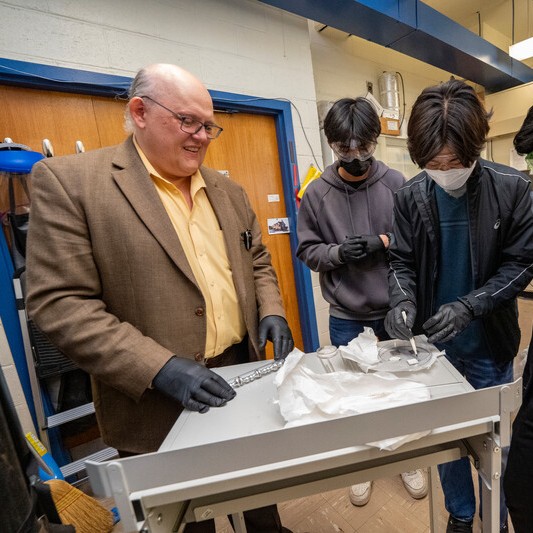
Professor Clive Clayton focuses on environment–surface interactions to design materials with enhanced performance and degradation resistance under extreme conditions. By integrating advanced surface and spectroscopic techniques with electrochemistry and materials synthesis, his laboratory uncovers the fundamental mechanisms governing corrosion, catalysis, and antimicrobial behavior. Additionally, his work explores nanoscale structure, optical properties, and coating performance essential for engineering applications.
LEARN MORE
Michael Dudley
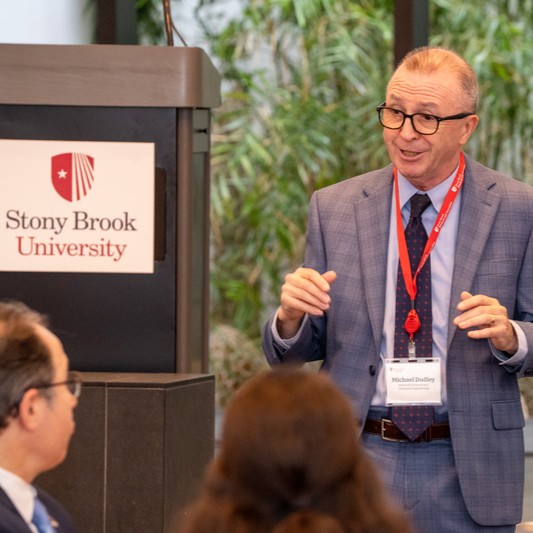
Professors Michael Dudley and Balaji Raghothamachar specialize in the advanced characterization and structural analysis of crystalline materials using synchrotron X-ray topography, high-resolution X-ray diffraction, and electron microscopy. Their research primarily investigates wide bandgap semiconductors designed for power electronics, LEDs, and laser diodes. Additionally, their work encompasses the characterization of oxide materials and silicon-based materials for integrated circuits and solar applications.
LEARN MORE
Balaji Raghothamachar
Professors Michael Dudley and Balaji Raghothamachar specialize in the advanced characterization and structural analysis of crystalline materials using synchrotron X-ray topography, high-resolution X-ray diffraction, and electron microscopy. Their research primarily investigates wide bandgap semiconductors designed for power electronics, LEDs, and laser diodes. Additionally, their work encompasses the characterization of oxide materials and silicon-based materials for integrated circuits and solar applications.
LEARN MORE
Gary Halada
Professor Gary Halada investigates nanoscale reactions and transformations in natural and engineered materials, emphasizing corrosion, biomedical interactions, and material resilience. His research involves designing responsive, programmable materials for additive manufacturing and advanced technologies. Through cross-disciplinary approaches integrating synthesis and analytical techniques, he also develops innovative materials and technologies for environmental remediation and sustainable energy.
LEARN MORE
Taejin Kim
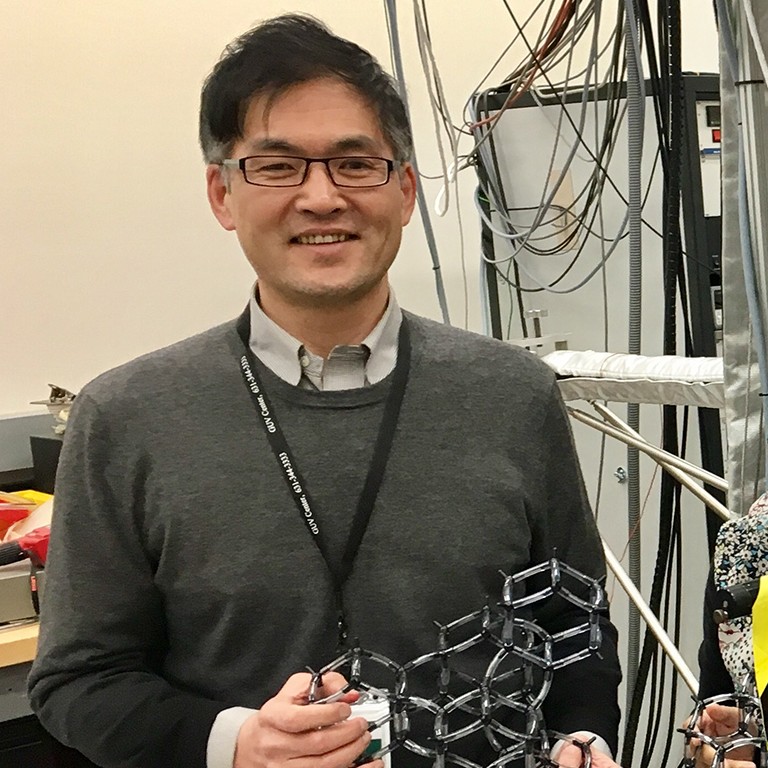
Professor Taejin Kim focuses on the synthesis of supported metal and metal oxide catalysts using one-pot chemical vapor deposition and sonication methods. Utilizing advanced operando characterization and synchrotron techniques through BNL collaborations, he investigates structure-catalytic performance relationships in CO2 hydrogenation, NH3 decomposition, and CO oxidation. His research also includes fundamental studies and applications of functional fabric materials.
LEARN MORE
Devinder Mahajan
Professor Devinder Mahajan’s research focuses on energy policy and the development and implementation of hybrid energy technologies. His work explores the conversion of CO₂ and renewable natural gas (RNG) into fuels and chemicals, alongside the catalytic production of methanol, mixed alcohols, and hydrocarbons via Fischer–Tropsch synthesis. He also investigates ultra-deep hydrodesulfurization (HDS) for clean fuels and extremophile-mediated hydrogen production for fuel cells. Furthermore, his research encompasses laboratory mimics of gas hydrates and the extraction of geothermal energy and minerals from brines.
LEARN MORE
Alexander Orlov
Professor Alexander Orlov’s research focuses on tuning nanoparticles and nanostructures to deliver unprecedented catalytic activity for CO2 conversion and clean hydrogen production. He utilizes computational design and advanced in-situ characterization to observe chemical reactions in catalytic and energy storage systems. Furthermore, his work advances sustainable technologies by developing self-cleaning solar panels, environmentally friendly polymer composites, and structural concrete.
LEARN MORE
Miriam Rafailovich
Professor Miriam Rafailovich focuses on polymer materials, nanocomposites, and the development of biodegradable, sustainable polymer systems through advanced manufacturing. Her highly interdisciplinary research spans environmental protection, including nanotoxicology and flame retardants, as well as green energy technologies like fuel cells and photovoltaics. Additionally, she extensively explores biomedical applications, including tissue engineering, biosensors, and bio-nano interactions.
LEARN MORE
Jonathan Sokolov
Professor Jonathan Sokolov’s research explores the nanoscale processes governing environmental–material interactions, with a focus on chemical and structural transformations at material interfaces. He investigates environmental degradation, including corrosion and contaminant interactions, as well as biogeochemical and microbial influences on material behavior. To address these environmental challenges, he develops advanced materials and innovative, cross-disciplinary research methodologies.
LEARN MORE